Midjourney Character Reference: Keep an AI Influencer Looking Like the Same Person
By Emre Danisan · Founder of Danex AI, Artificial Intelligence Expert
How Midjourney character reference works in 2026 - legacy --cref on V6, Omni Reference (--oref) on V7, and how to keep face consistency when building an AI influencer.
Midjourney character reference keeps the same face across stills by locking a reference image and reusing settings. Use it for consistent AI influencer portraits, then place that identity into new scenes. Danex AI Influencer Generator complements Midjourney by turning a stable persona into trend clips and scheduled posts without rebuilding the face each time.
TL;DR: Midjourney character reference
Midjourney character reference is how you stop your AI influencer from looking like a different person every generate. On V6 that meant --cref (and --cw for weight). On V7 the official path is Omni Reference with --oref and --ow. Either way, pick one clean reference face, reuse it, and treat Midjourney as the stills engine - not the whole social stack. Platforms like Danex.ai sit next to that workflow when you want persona reuse, scenes, and posting without juggling Discord parameters all day.
On this page: Midjourney character reference
- Why character reference matters for AI influencers
- What Midjourney character reference actually is
- Legacy --cref on Version 6
- Omni Reference (--oref) on Version 7
- How to build a usable reference image
- A practical Midjourney consistency workflow
- Where Midjourney stops and a platform starts
- Common mistakes that break face consistency
- FAQs
Why character reference matters for AI influencers
If you are trying to create an AI influencer, pretty images are not the hard part. Recognition is.
Followers notice when the jawline shifts, the eyes change color, or the nose looks rebuilt every Tuesday. That is face drift. Character reference exists to fight it.
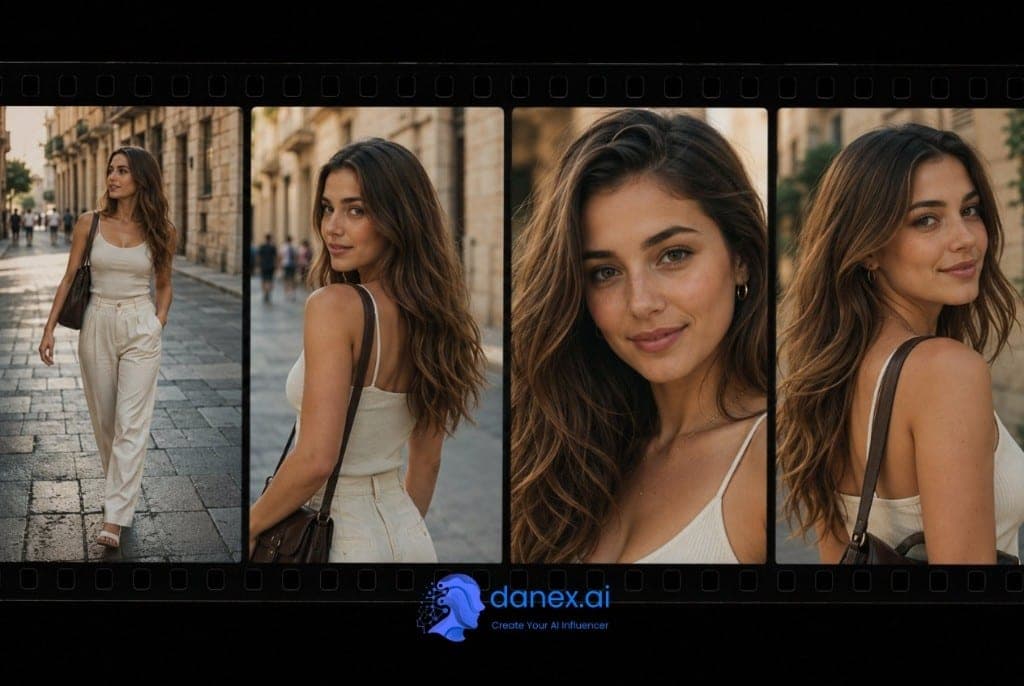
Midjourney became the default stills tool for a lot of virtual creator experiments because the aesthetic is strong. The consistency problem is older than the hype around AI influencers, though. You need a system that says: this is the same person, even when the cafe, outfit, or camera angle changes.
What Midjourney character reference actually is
In plain language, Midjourney character reference means: upload or link a reference image, then ask the model to carry that identity into a new prompt.
Official Midjourney docs treat this as image-guided generation, not fine-tuning. You are not training a LoRA. You are steering each prompt with a visual anchor.
Two eras matter in 2026:
| Era | Parameter | Weight | Best for |
|---|---|---|---|
| V6 (legacy Character Reference) | --cref [image URL] | --cw 0–100 | Face-focused reuse, older tutorials |
| V7 (Omni Reference) | --oref [image URL] | --ow 1–1000 (default 100) | Current official character / subject locking |
If you are copying a 2024 Discord tip that only mentions --cref, check your model version first. On V7, Omni Reference is the documented path.
Legacy --cref on Version 6
--cref was Midjourney's Character Reference parameter. You appended an image URL and Midjourney pulled core traits - face structure, hair cues, sometimes clothing - into new generations.
--cw (character weight) controlled how tightly the model clung to that reference:
--cw 100- strong lock; face and often outfit details stick hard--cw 50- middle ground; identity holds, wardrobe can flex more--cw 0- mostly face; clothes and hair length can change with the prompt
That weight dial is why --cref still shows up in older "how to make a consistent AI character" guides. For V6 workflows it remains useful. For V7, treat it as legacy context, not the default recipe.
Omni Reference (--oref) on Version 7
Midjourney's official Omni Reference docs describe a V7 system that can carry a person, object, vehicle, or creature from one reference image into new scenes.
On Discord, the pattern looks like:
a woman ordering coffee in a sunlit cafe, natural candid photo --oref https://your-image-url.jpg --ow 100
On the web UI, you drop an image into the Omni Reference slot and adjust strength with the slider.
A few practical notes from Midjourney's own guidance:
- You need a text prompt plus the reference - reference alone is not enough
- One Omni Reference image per prompt
--owdefaults to 100; range is roughly 1–1000- Higher
--owkeeps more of the reference (face, clothes, details); lower--owleaves room for style or outfit changes - Omni Reference is tied to V7; some edit features that still run older versions may not play nice with it
- GPU cost is higher than a plain V7 image
If you want the face locked but the wardrobe to change for an influencer feed, start near the default weight and nudge down until outfits finally listen. If the face starts drifting, nudge back up.
How to build a usable reference image
Garbage in, garbage out. Midjourney character reference is only as good as the anchor photo.
Aim for:
- Clear face, front or three-quarter angle
- Even lighting (no heavy neon color casts)
- Neutral expression if you plan many mood variants later
- Minimal occlusion (no giant sunglasses covering half the face unless that is the brand)
- One subject in frame
Then keep that same file as your "passport photo" for the character. Do not swap reference images every batch unless you are deliberately redesigning the persona.
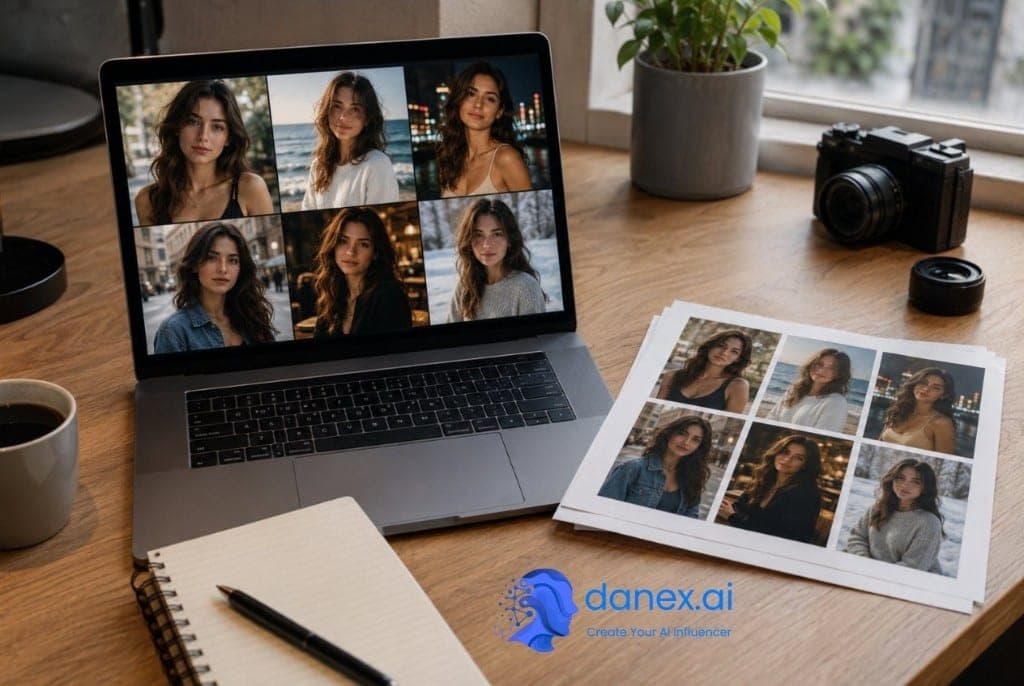
A lot of creators also save a small sheet of approved looks - same face, different outfits - and only promote winners into the main reference slot. That reduces the chance that a weird generation becomes the new identity.
A practical Midjourney consistency workflow
Here is a workflow that holds up for AI influencer stills:
- Lock the persona on paper - age vibe, hair, signature trait, niche. Midjourney cannot invent brand strategy for you.
- Generate or photograph a clean base face - this becomes your character reference.
- Run Omni Reference (or
--crefon V6) across 8–12 scene prompts before you post anything. - Reject drift early - if three outputs in a row look like cousins instead of the same person, fix weight or reference before you fill a content calendar.
- Batch by lighting family - golden hour batch, studio batch, night city batch. Mixing every lighting style in one Discord thread makes review harder.
- Export keepers into a folder named by persona - not by date. Future-you will thank present-you.
Prompts should describe the scene, not re-litigate the whole face every time. When the prompt and the reference argue ("blue eyes" in text, brown eyes in the photo), Midjourney invents a compromise. Compromises look like strangers.
Where Midjourney stops and a platform starts
Midjourney is excellent at stills. An AI influencer also needs video, trend formats, captions, and a posting rhythm.
That is usually where Discord-only stacks get heavy. You end up with Midjourney for faces, another tool for motion, CapCut for edits, and a scheduler that never quite syncs.
Danex AI is built for that second half of the job: define a persona once with Generate AI Persona, drop them into scenes with Be Anywhere You Want, and move toward short-form and auto posting without rebuilding identity from scratch each week.
You can still use Midjourney character reference for moodboards or hero stills. Plenty of teams do. Midjourney locks the still. A platform has to keep posting it.
For a wider tool map, see software used to create an AI influencer like Aitana Lopez - Aitana is only a public example, not an affiliation.
Common mistakes that break face consistency
- Changing the reference mid-campaign - new "better" face every Friday erases recognition
- Over-describing facial traits in every prompt - conflict with the reference image
- Maxing
--ow/--cwthen wondering why outfits never change - dial weight to the job - Using a busy group photo as the Omni Reference - the model does not know who the influencer is
- Judging consistency from one pretty output - judge from a grid of ten
Midjourney character reference FAQs
Does Midjourney still support --cref in 2026?
--cref belongs to the older Character Reference workflow, mainly associated with V6. On V7, Midjourney's documented approach is Omni Reference with --oref and --ow. Check the version on your prompt before you trust an old tutorial.
What is the difference between --cref and --oref?
--cref was character-focused reference on earlier versions. --oref is Omni Reference on V7 - broader subject locking (characters, objects, and more) with its own weight parameter --ow.
What --ow value should I use for an AI influencer?
Start at the default (100). Raise it when the face drifts. Lower it when you need outfit or style flexibility. There is no universal "best" number - it depends on how stubborn your reference and prompt are.
Can Midjourney character reference replace fine-tuning?
For many social stills workflows, yes - reference guidance is enough. If you need industrial-level identity lock across thousands of assets, teams sometimes add fine-tunes or a dedicated persona platform. Start simple before you train anything.
How does Danex AI relate to Midjourney character reference?
Midjourney handles image-level reference. Danex AI focuses on the influencer workflow around a saved persona - scenes, trends, and publishing. Soft handoff: generate inspiration in Midjourney if you want, then run the ongoing account in a platform built for reuse.